We are very excited to welcome Sylvia Arthur to the Women’s History Network, who will be giving a paper titled, ‘Unleashing the Tides of Muteness: A Women’s Oral History of West Africa’. The seminar will take place on Zoom on…
Category: Blog
The Women’s History Network blog
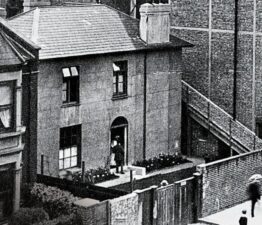
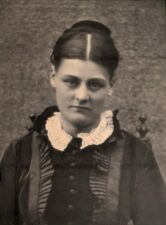
Rediscovering Helen Taylor (1831-1907) – Dr Janet Smith
My first encounter with Helen Taylor Whilst researching my M.A. dissertation on the feminist Irish nationalist, Anna Parnell, a brief reference to Helen Taylor in a newspaper piqued my interest. It was written in 1909 by the Irish nationalist Jennie…
Chronicling a Forgotten War Front: Dorothy Newhall’s Diary – Carol Coles
On the 30 September 1918, sanitary inspector Dorothy Newhall wrote in her diary; ‘Terrible excitement today! Peace terms sign with Bulgaria to evacuate Serbia!’[i] Dorothy was on a brief visit to Salonika (now Thessaloniki) when she wrote this entry and…
Hidden Heroines: Secret Stitching on the Home Front – Esther Dobson and Dr Elspeth King
‘Not all heroes wear capes’, a common refrain during and since the Covid pandemic, but the ideas behind that phrase go back much further and certainly played a part in the Home Front during the Second World War. Churchill instructed…
Anna Maria Garthwaite: One of the few 18th century British female silk designers – Elizabeth Strange
This blog post focuses on Anna Maria Garthwaite who was a silk designer in 18th century England. A silk designers’ purpose was to create designs that showed weavers what colours and decoration they should weave on their loom. Anna specialised…
A three-generation family story through Gwent Archives’ collection – Bec Howarth
Whilst preparing social media content for LGBTQ+ history month I came across the Welsh County LGBTQ+ timelines. Scanning the Newport timeline, one individual caught my eye – Amelia Vella. The timeline wrote how Amelia’s mother, Fanny Vella, was in the…
Boudoir Laments: Reading Gender and Spatiality in the Lyrics of Seventeenth-Century Chinese Gentlewomen – Yuemin He
Late Imperial China is often described as a society structured by strict gender hierarchies. Elite women were expected to remain within the domestic inner quarters, devoted to family duty, moral virtue, and household management, while public life and most forms…
The Prejudice of Welfare for Women Under the Poor Laws – Shagnick Bhattacharya
In April 1818, Catherine Macknally, described in the parish records of St Andrew, Plymouth, as a ‘common prostitute’, was apprehended while wandering and begging with her two illegitimate children—both under two years of age.[1] Examined before two justices of the…
‘The Finding Katherine Project’: a window into the life of Scottish suffragist, Katherine Walker Lindsay – Katherine Ingram
I first learned of Katherine Walker Lindsay in early 2025 when I was examining the letter books of the Glasgow and West of Scotland Society for Women’s Suffrage (GWSSWS), a branch of the National Union of Women’s Suffrage Societies (NUWSS),…