Women’s participation in Indian science since the mid-twentieth century is often framed through celebratory narratives of progress, characterised by increased educational access, rising numbers of women pursuing STEM degrees and gradual inclusion in scientific institutions. Such unequivocal narratives of success, however, conceal the trying conditions under which women’s scientific lives became possible in the first place. For many women, entry into science was equally about negotiating normative gender roles and expectations within the family as it was about scientific merit and aspirations.
These gendered dynamics emerge vividly in life-history interviews conducted for my doctoral research with four Indian women scientists who studied science at British universities in the post-war era. Tracing key moments in their lives, from childhood in India to doctoral education in Britain and their professional lives, I found that the family consistently emerged as a site where women’s scientific aspirations were imagined and legitimised. The family, as a constitutive force, has been largely overlooked in the literature examining histories of women in science. In post-independence India, the family functioned as a channel for social mobility and respectability, and overseas education increasingly became a strategy for accumulating cultural capital. As a result, women’s educational trajectories became embedded within middle-class and upper-caste familial projects, rather than being solely the outcome of individual scientific ambitions.
Reflections on childhood offer important insights into the gendered norms that shaped women’s scientific trajectories from an early age. Judith E. Walsh’s exploration of Indian childhood in the nineteenth century highlights how Indian families were differentiated along gendered lines. Paternal figures embodied authority, discipline and distance, whereas maternal figures were associated with attentiveness, care and emotional labour. These distinctions structured early educational experiences within family and school, shaping, as my interview narratives reveal, how men and women came to imagine their place within scientific and professional worlds from childhood onwards.
By the twentieth century, these gendered patterns persisted. Fathers and male teachers continued to prepare boys for scientific careers, while the absence of female role models limited girls’ perception of science as a viable path. For Indian girls, schools were often the first sites where gendered expectations were encountered and negotiated. As Mary Ann Chacko notes, students in Indian society face constraints on being agentic and exploratory, particularly girls, who are socialised to be dependent, self-effacing, restrained, and submissive. These early educational experiences shaped girls’ sense of self-efficacy and belonging, which in turn structured how they navigated later academic spaces. Subsequent participation in higher education continued to be mediated by structural inequalities, especially as scientific fields were organised along gendered lines.
All four of my interviewees, for instance, recalled being encouraged to pursue science from an early age, highlighting how family actively shaped scientific industriousness and career trajectories. The political and intellectually elite families to which my interviewees belonged encouraged academic mobility as a way of establishing scientific careers. However, academic mobility was often conditional, tied to family approval, expectations of returning home and concerns about marriage, motherhood and propriety. Although studying science overseas offered women greater autonomy, the family continued to actively mediate the possibility for scientific becoming through material and emotional support, as well as expectations that normative gender roles would be maintained alongside scientific careers. The oral history interviews therefore reveal the complex entanglement of kinship with the formation of scientific selfhood in the postcolonial Indian context.
These experiences can be examined through Teresa de Lauretis’s concept of ‘technologies of gender’, which draws attention to how gender is produced through sociocultural practices, discourses and institutions. My oral histories reveal that gendering practices within families and institutions were sometimes explicit and at other times subtle, operating through assumptions about women’s scientific merit and belonging. Returning from Britain and pursuing a scientific career in India further intensified these gendered experiences. While women’s participation in science increased significantly over the late twentieth century, numerical inclusion did not necessarily translate into structural and normative equality. Gendered disparities persisted in senior positions, higher-status subfields such as computer science and engineering, and access to funding, publications and awards.
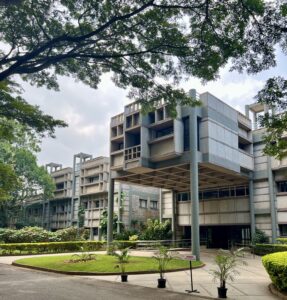
Abha Sur’s research on the experiences of women working at CV Raman’s laboratory at the Indian Institute of Science, Bangalore in the 1940s discusses the enduring myth of gender neutrality in science. Laboratory interactions demonstrated how gender and caste prejudices were embedded within scientific practice, reflecting and reproducing the broader social hierarchies within Indian society. Access to higher education and scientific spaces was already stratified. The women who entered these spaces were typically from urban, upper-caste backgrounds with access to material resources, further complicating the experiences of those outside these social locations.
While institutional histories expose structural inequality, oral history interviews bring to light the embodied and affective nature of these inequalities in pursuing scientific careers. Unequal power relations symbolically and materially shape women’s everyday experiences in science. The presence of institutional allies, such as supportive supervisors or mentors, was crucial in mitigating structural barriers. At the same time, gender was not experienced uniformly. It intersected with other social categories, resulting in varied and uneven experiences. Arfuch’s concept of ‘gendered rhythms’ offers a useful framework for understanding the complexity and elusiveness of gender in culture and institutions. Gender, Arfuch suggests, is something that may be felt and experienced as much as it is observed and analysed.
The life-history narratives of women scientists challenge linear stories of progress in women’s participation and success in science. Instead, they show how women’s scientific lives were shaped by normative gender expectations, familial obligations and institutional hierarchies. Attending to these histories allows us to examine how gendered inequalities continue to structure scientific life. They also reveal various forms of agency, ambition and scientific industriousness through which women navigated, negotiated and at times reshaped the conditions of their inclusion and sense of belonging in science.
Nilakshi Das has recently completed her PhD in History of Science. Her PhD was funded by the ESRC and jointly undertaken at the University of Leicester and the University of Warwick. Nilakshi holds an MSc in Education from the University of Oxford and an MA in Sociology from the University of Manchester, funded by a Commonwealth Scholarship. She is an IHR Fellow.
References:
- Arfuch, Leonor. Memory and Autobiography: Explorations at the Limits. Cambridge: Polity Press, 2020.
- Béteille, André. “Caste and Family: In Representations of Indian Society.” Anthropology Today8, no. 1 (1992): 13–18.
- Chacko, M. A. “Schooling as Counter-Socialization.” In Curriculum Studies in India, edited by W. F. Pinar, 161–90. New York: Palgrave Macmillan, 2015
- de Lauretis, Teresa. Technologies of Gender: Essays on Theory, Film, and Fiction. Bloomington and Indianapolis: Indiana University Press, 1987.
- Farland-Smith, Donna. “Struggles of Underrepresented Girls as They Become Women: Understanding How Race and Gender Impact Personal Science Identity Construction.” Journal of Educational Issues 1, no. 1 (2015): 114–27.
- Kumar, Nita. The Politics of Gender, Community and Modernity: Essays on Education in India. New Delhi: Oxford University Press, 2011.
- Gonzalez Perez, Susana, Ruth Mateos de Cabo, and Milagros Sainz. “Girls in STEM: Is It a Female Role-Model Thing?” Frontiers in Psychology (2020).
- Sur, Abha. “Dispersed Radiance: Women Scientists in C. V. Raman’s Laboratory.” Meridians 1, no. 2 (Spring 2001): 113.
- Walsh, Judith E. “English Education and Indian Childhood during the Raj, 1850– 1947.” Contemporary Education Dialogue 1, no. 1 (2003): 35–75.