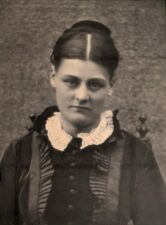
Gwen Farrar and Norah Blaney, both classically trained musicians, born in London, met each other around 1917, performing in Lena’s Ashwell’s pioneering concert parties for the troops which toured behind the allied lines in France and Belgium. They quickly adjusted their highbrow repertoire to include popular songs, repartee and clowning and, at the end of the war they toured Britain’s Music Halls. By 1932, having been household names, their star was beginning to fade, though they filled the London Palladium for their farewell performance in February. Days later Norah married and retired to live as a doctor’s wife in Yorkshire.
Through their unique comedy double act they made a connection with the public on both sides of the Atlantic, appearing in New York at the behest of producer Florenz Ziegfeld and making numerous recordings. Their performances on stage reflected their offstage sexual and emotional attraction to each other, leading to potentially open readings by the public. Through their outstanding skills as musicians and comedians they earned a place in the popular imagination which was seriously undermined by the cultural moment in 1928 when ‘detailed and explicit information on lesbianism…became suddenly accessible in most major newspapers’[1] in events which ‘have so permeated our own cultural consciousness that it has become extremely difficult for us to reconstruct a cultural era prior to that moment.”[2] This coincided with the trial for obscenity of ‘The Well of Loneliness’.
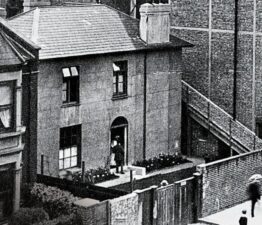
In my book ‘Tell Me I’m Forgiven: The Story of Forgotten Stars Gwen Farrar and Norah Blaney I uncover Radclyffe Hall’s great liking for Blaney & Farrar and look at the social connection she and her partner Una Troubridge formed with Gwen whose life bears a startling resemblance to that of Hall’s female-bodied protagonist Stephen Gordon. Both Gwen and Stephen found their love of horse-riding eclipsed by the allure of the motor car and the possibilities their vehicles allowed for assignations with women. Both lost their fathers in tragic accidents while they were in their late teens and endured turbulent relationships with their haughty and disapproving mothers. Lady Farrar deplored her daughter’s decision to become an entertainer and was further alarmed by her partnership and co-habitation with lower-middle-class Norah. The home they shared at 217, King’s Road Chelsea was the location for the launch of my book in October 2019. Funding from the Arts Council and the Heritage Lottery Fund allowed me and my performing partner Rosie Wakley to stage further events in Brighton, Bradford and Effingham, Surrey in which we re-imagined the Blaney & Farrar double act and worked with local historians and amateur and professional musicians to bring Gwen and Norah’s story to a wider audience. In lockdown our work became a digital project which crystalized in this 20 minute documentary short.
The book, which has been described as ‘bringing a fascinating perspective to the 20th century, reversing so many historical presumptions about what is significant, mainstream and familiar.’[3] also looks at the black female artists who were challenging gender norms at the heart of the Harlem Renaissance during Gwen and Norah’s stay in New York in 1925-6. Gladys Bentley, Ma Rainey, Florence Mills, Josephine Baker and Elizabeth Welch all feature, alongside the story of the unconventional relationship between Harlem’s Edna Lewis Thomas and British socialite Olivia Wyndham.
The section which perhaps gave me the most pleasure to research were the later years in which I tracked Norah’s resilient passage into feisty old age. She died in 1983 at the age of 90. In her youth she had watched and absorbed the performances of such great stars as Gertie Millar, Ruth Draper, Ella Shields, Vesta Tilley and Yvette Guilbert. In the lineage of female comedy performers, Norah represents a link between them and the artists who followed. Her resilience, professionalism and versatility are a lesson to any of today’s hopefuls seeking fame on a plate. Her act with Gwen can be seen as the precursor to the various queer or female comedy partnerships that followed; the Waters Sisters, Hinge and Bracket, Wood and Walters, French and Saunders, Mel and Sue, and Youtubers, Rose and Rosie.
The topicality of Blaney and Farrar’s material made the act ephemeral, very much of its own time; but the sincerity and precision of the looks, smiles, lyrics and harmonies Gwen and Norah shared make them, despite their shortcomings and inconsistencies, pioneers of lesbian courage and visibility.
[1] Doan, L Fashioning Sapphism xiii
[2] Ibid xv
[3] Professor Sarah Lloyd Director: Everyday Lives in War, First World War Engagement Centre
Alison Child is a researcher, writer, teacher and performer. Her book ‘Tell Me I’m Forgiven: The Story of Forgotten Stars Gwen Farrar and Norah Blaney’ is available for £10.00 here: https://www.behindthelines.info/tell-me-i-m-forgiven-gwen-farrar-norah-blaney/