Discovering Urania
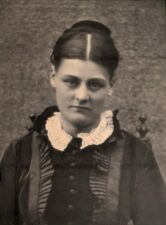
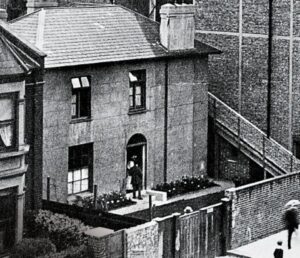
It began with research into Charles Dickens (1812-1870) for my work creating an education programme around A Christmas Carol and somewhere along that route I discovered Urania Cottage – a little-known part of Dickens’s life that intrigued me immediately. Urania Cottage was a home established in 1847 by Dickens and Angela Burdett-Coutts for women then described as ‘fallen’, including women associated with prostitution, petty crime and imprisonment.
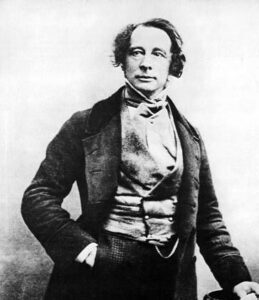
Charles Dickens and the heiress Angela Burdett-Coutts (1814-1906) developed a friendship around charitable work and social reform. Burdett-Coutts wanted to do something practical for women living in poverty and prostitution, and Dickens enthusiastically helped her shape what became Urania Cottage. His planning was extraordinarily detailed: what the women should learn, how their days should be structured, what rules they would live under, and what sort of future they might have when they left.[1]
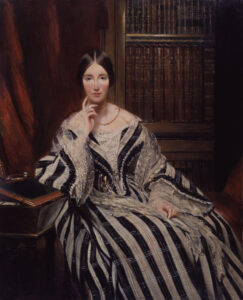
Baroness Burdett-Coutts, however, was far from a passive funder. One of the wealthiest women in Britain, she used her fortune extensively in philanthropy and brought her own convictions to the project. Their correspondence shows her questioning Dickens and sometimes disagreeing with him. One revealing difference was their views on women’s futures: Dickens often imagined marriage as part of a successful new life, while Burdett-Coutts was less convinced a woman needed a husband to live usefully or happily.[2]
Dickens chose a house in Shepherd’s Bush called Urania Cottage. It operated for more than a decade. Dickens wanted it to feel like a home rather than a prison, though life was highly structured. He sought candidates through prison governors and other institutions, including ragged schools, which educated some of the poorest children, and Magdalen institutions, which housed and sought to reform women associated with prostitution. Dickens interviewed the women himself and encouraged them to speak honestly about their lives.
He recorded those histories in a case book intended for his and Burdett-Coutts’s eyes only. That case book has never been found.[3] And that absence became one of the things that fascinated me most.
The Women Left in the Margins
Eventually, it was not Dickens who held my attention, nor the Baroness. It was the women at the heart of that case book. The surviving records, including Dickens’s correspondence, court and prison records, newspaper reports and institutional documents, give us names, incidents, offences, punishments and the opinions of reformers, prison staff and others, but the women’s own voices are much harder to recover.
One woman I encountered during wider research was Rose Callaghan. She had no connection to Urania Cottage; her story belongs to the 1880s and 1890s. I found her while researching poor and criminalised women in nineteenth-century Britain, and her case helped me understand the world from which my fictional characters might have emerged.
Rose Callaghan lived with William Parkin and supported him through prostitution. In 1882, William Parkin was convicted of brutally assaulting Rose. She was so badly injured that she was unable to appear in court. The account describes a wound beginning above her right eye, exposing around two inches of bone, continuing to her upper lip and down towards her left breast. She suffered severe blood loss and another injury to her leg from being kicked. The scars remained with her for the rest of her life.[4]
More than a decade later, Rose and Parkin were still living together, and Rose was still supporting him through prostitution. In 1895, he returned home drunk and demanded money. She had earned nothing that day and had nothing to give him. He “kicked her black and blue all over” and dragged her by the hair. The violence continued the following day. Neighbours heard screams and cries of “Murder!” The magistrate eventually described Parkin as “a disgrace to humanity” and sentenced him to six months in prison.[5]
What stayed with me was not just the brutality of the case, but how little the label “prostitute” tells us about Rose: the violence she endured, the man who profited from her work, or the limited choices available to her. I did not want to judge these women for how they survived. Some stole, others sold sex, and some lied, fought, drank or broke rules. They were complicated human beings living at a time when poor women had very few safe options.
From Archive to Stage
My research for the play ranged from Jenny Hartley’s Charles Dickens and the House of Fallen Women and Lucy Williams’s Wayward Women to Henry Mayhew’s London Labour and the London Poor, Elizabeth Gaskell’s Ruth, Mrs Beeton’s household manual, Old Bailey proceedings, newspaper archives and Dickens’s own letters and Household Words writing.[6]
From that research came Urania: Dickens’ Home for Fallen Women, a new play for Dickens Festival North, running at The Assembly Rooms, Newcastle, from 13–15 November 2026. It follows two fictional women who enter the home: Ada, fiery and impulsive, with a history of prostitution and crime, and Rose, a soft-spoken young woman who has fallen on hard times after the death of her mother. Their stories are fictional, but the social world around them is built from the fragments I found.
The missing case book still bothers me. Somewhere, Dickens once recorded the stories these women told him about themselves. That book has disappeared. What remains are fragments: court cases, prison records, newspaper reports, institutional files and the words of people who judged, punished or attempted to reform them.
I cannot restore the voices that have been lost, and I do not want dramatic reimagining to pretend that it can. But theatre can ask us to look more closely at the gaps. Those fragments are enough to make the women difficult to forget. If audiences leave wanting to know more about these women rather than simply about the famous man who tried to reform them, then I think the play will have done something worthwhile.
About the Author
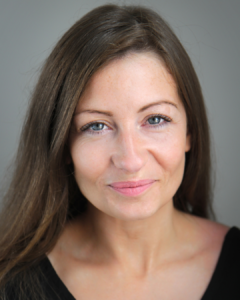 Louise Dearden is a North East actor, writer and theatre-maker with more than 20 years’ professional experience. Her work has included collaborations with Northern Stage, Live Theatre, Elysium Theatre Company and Operating Theatre. Alongside acting, she develops original theatre and creative education projects rooted in history, literature and working-class stories. Her previous writing includes the Arts Council-funded immersive production Last Orders and the audio drama Maleficium. Her latest play, Urania: Dickens’ Home for Fallen Women, grew from research into Charles Dickens, Angela Burdett-Coutts and the women connected with Urania Cottage.
Footnotes
[1] Charles Dickens to Angela Burdett-Coutts, May 26, 1846, Morgan Library & Museum.
[2] Hartley, Jenny, Charles Dickens and the House of Fallen Women. Methuen, 2008.
[3] Hartley, Charles Dickens and the House of Fallen Women; Charles Dickens, “Home for Homeless Women,” Household Words, April 23, 1853.
[4] Lucy Williams, Wayward Women: Female Offending in Victorian England (Pen & Sword History, 2016), 148–49.
[5] Williams, Wayward Women, 148–49.
[6] Henry Mayhew, London Labour and the London Poor; Elizabeth Gaskell, Ruth; Isabella Beeton, The Book of Household Management; Old Bailey Proceedings Online; Charles Dickens, “Home for Homeless Women,” Household Words, April 23, 1853.