BIOGRAPHICAL NOTES AND SELECT BIBLIOGRAPHY
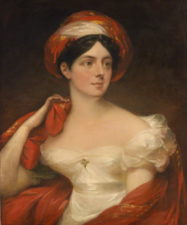
Eliza Mary King (nee Richardson 1831-1911), better known as Mrs E M King, was a New Zealand feminist who campaigned in England and the United States for repeal of the Contagious Diseases Acts, world peace, co-operative housekeeping, rational dress reform and implementation of the agrarian policies of the US Farmers’ Alliance.[1]
Eliza Mary Richardson was the third child of Thomas Watkin Richardson, an Oxford educated lawyer and Mary Anne Richardson (Whittington). Like her elder siblings Katherine (de Voeux) and William, who apparently died in infancy, Eliza was born in Offenbach am Main, Germany. By 1851 the Richardsons had returned to England and in August of that year the family emigrated to New Zealand where they settled at ‘Glen Avon’ on the Waiwhakaiho River, near the newly established settlement of New Plymouth. Eliza Mary Richardson married William Cutfield King[2] in 1855. In 1861 King, who was a captain in the Rifle Volunteers, was ambushed and killed in the Taranaki Wars, leaving Mrs King a widow with two infant daughters. She never remarried. Her father died in the same year as her husband. These bereavements left Mrs King with sufficient inherited wealth to enable her to devote her life to a succession of reformist causes. In 1863, while still living in New Plymouth, she wrote Truth. Love. Joy. or The Fruits of the Garden of Eden, a feminist critique of the Old Testament and the gospel of St Paul. The book was published in Australia and England where it was promoted by the atheist George Holyoake and drew hostile reviews in the colonial and English press.


In 1870 Mrs King returned to England with her daughters, where she joined Josephine Butler in the campaign against the Contagious Diseases Acts, which regulated prostitution in the port cities.[3] She was briefly notorious as a street protest organiser, speechmaker, polemicist and member of the Executive Committee of the Ladies National Association for the Repeal of the Contagious Diseases Acts.

During 1872-1875, Mrs King became a familiar figure in English public debate. She the established the Women’s International Peace Society in 1872 and addressed the annual conference of the Social Science Association in Plymouth on ‘Work of an International Peace Society and Women’s Place in it’. In the following year she addressed the annual conferences of the British Association for the Advancement of Science on ‘Cooperative Housekeeping’ and the National Association for the Promotion of Social Science on ‘The Science of Domestic Economy’, among other subjects. These addresses, subsequently revised and published,[4] were controversial. Her advocacy of cooperative housekeeping prompted the accusation that she proposed the subversion of English family life.[5] In 1873 she commissioned the architect, Edward William Godwin, to draw plans for an associated living complex that would provide housing for 100 or more residents. Godwin’s drawings, neo-gothic in style, were published in April 1874 with a further essay by Mrs King on the benefits of cooperative housing. Mrs King’s proposals and Edward Godwin’s plans were intended to elicit financial support for building such a complex. The scheme failed, however, to secure backing.


With the exception of a lecture in Dublin 1878 on equal suffrage[6] Mrs King withdrew from public life between 1875 and 1881. For part of this time she was resident in Dresden with her daughters. While there she wrote to Florence Pomeroy, Viscountess Harberton in support of her views on dress reform and, on her return to England in 1882, they established the Rational Dress Society with Lady Harberton as president and Mrs King as honorary secretary. She resumed her polemical role in public addresses and publications, the most notable of which was her pamphlet, Rational dress; or, The Dress of Women and Savages.[7] In November 1882 she announced that the Rational Dress Society would stage a Rational Dress Exhibition in the following year. As a probable consequence of her too radical views on dress reform, she was displaced as secretary of the Rational Dress Society in early 1883. She immediately announced the formation of a competing organisation, the Rational Dress Association, which would stage the Rational Dress Exhibition which had been abandoned by the Society. The exhibition, held in Princes Hall Piccadilly, opened with an address by Mrs King and ran from 18th May to 12th June, 1882.[8] Though there were large attendances and some reviews were favourable, the extensive newspaper and journal coverage was predominantly hostile.


After another showing of her Rational Dress Exhibition in Hull in April 1884,[9] Mrs King left England with her companion Elizabeth, ‘Nellie’ Glen (1848?-1900), for Canada and the United States, where she continued her campaign for rational dress reform. In 1886 Mrs King and Nellie Glen bought an orange grove in Melrose in northern Florida, where she soon became involved in the agrarian reform movement of the Farmers Alliance[10] as a newspaper editor, columnist and ‘county lecturer’. In 1890 Mrs King and Nellie Glen established the Melrose Ladies Literary and Debating Society, one of the first women’s clubs in Florida, now known as the Melrose Ladies’ Club.[11] Mrs King delivered her last public lecture in Melrose in 1907 on ‘Scandal: its Right and its Wrong Side’. She returned to New Zealand later in that year to live with her daughters and died in 1911 in Omata, not far from her marital home in New Plymouth. Her body lies in a railed enclosure together with her father Thomas Watkin Richardson and her husband, William Cutfield King.
Ian Leader Elliot (c) December 2013
Dr Ian Leader Elliott studied law at Melbourne University before undertaking postgraduate study at Chicago Law School as a Fulbright Fellow in 1967-8. He returned to Australia to teach at Melbourne Law School and subsequently at the University of Adelaide School of Law, where he is an Emeritus Fellow. He has published extensively on criminal law and criminal law reform. He was a Commonwealth consultant on the Model Criminal Code n 1992-2002 and a consultant on various other federal, state and UK law reform projects. In retirement, his research interests are more eclectic; the life and opinions of Mrs EM King and, in an unlikely pairing, Thomas Macaulay’s Indian Penal Code (1837), currently provide both delight and stimulation.
Note: See Mrs EM King – Campaigning for Repeal of the Contagious Diseases Acts Pt 2 for Select Bibliography – Published 22 December 2013, 8.00am
[1] A more extensive account of her life, with other documents, can be found in the collections of Puke Ariki, New Plymouth: http://ketenewplymouth.peoplesnetworknz.info/notable_taranaki_identities/documents/show/1268-mrs-e-m-king-1831-1911-brief-notes-on-her-life (accessed 11 December 2013) [2] http://en.wikipedia.org/wiki/William_Cutfield_King (accessed 11 December 2013) [3] Judith R Walkowitz, Prostitution and Victorian Society: Women, Class, and the State (CUP, 1980). See Chapter 9, ‘The Repeal Campaign in Plymouth and Southhampton 1870-4’, which provides a summary account of Mrs King’s role in the repeal campaign. [4] ‘The Work of an International Peace Society, and Woman’s Place in it’, Victoria Magazine, (1872-3) Vol 20, 25-33; ‘Co-operative Housekeeping’, Contemporary Review, vol 23, (1873: Dec-1874: May) 66-91; ‘Science of Domestic Economy’, Victoria Magazine, vol 24 (3 November, 1874) 130-49. [5] The Spectator, Saturday, 27 September 1873, ‘The British Association on Servant Girls’: ‘The Englishman does not want a joint stock co-operative phalanstere, however perfect its organisation, or however economical or useful to promote flirtation between the sexes; but a house of his own, where he is master….’. [6] ‘Women’s Suffrage’ (1878) 32 Victoria Magazine, 264-271. [7] (London : Kegan Paul, Trench & Co., 1, Paternoster Sq, 1882). [8] The Exhibition of the Rational Dress Association, 1883, Wyman, London. Reprinted as Catalogue of Exhibits and Gazette, The Rational Dress Association, 1978, Garland publishing, New York. [9] See the report of the ‘Grand Marine Bazzar in Hull’, Hull Packet and East Riding Times, 18 April, 1884 [10] Wikipedia http://en.wikipedia.org/wiki/Farmers’_Alliance (accessed 11 December 2013) [11] Jessie Hamm Meyer, Leading The Way: A Century Of Service: the Florida Federation of Women’s Clubs, 1895-1995 (Lakeland, Florida Federation of Women’s Clubs (1994), 5.