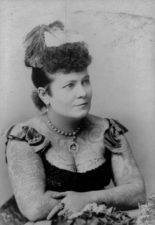
It is often claimed that tattooed women are a symbol of modernity, defying the restricting beauty standards of society.[1] Nonetheless, more wide-ranging research reveals that this is a generalised and too simplistic a view of tattooed women. My research on…
Category: Blog
The Women’s History Network blog
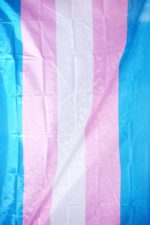
When sources hurt: Researching anti-trans ideologies as a trans person, by Rebecca Hickman
My project delves into the political strategies and concepts that have powered the trans rights movement in the United Kingdom over the past half-century, particularly the concept of ‘recognition.’ The aim of my research is to understand what ‘recognition’ has…
‘Unfit and untrained, physically and morally, to stand so sudden and violent a change of environment’ : Irish Female Emigration to Britain in the Late Twentieth Century
[i]My life-long fascination with the role of gender in shaping women’s working lives began when, at the age of six, a doctor asked me if I wanted to be a nurse when I grew up. When I answered that I…
Bringing Ourselves Along with Us: The Realities of Historical Writing
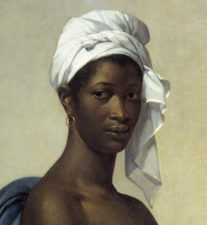
I am a minoritized scholar – something that is usually clear by looking at me – working with disenfranchised communities: Black women in nineteenth century France. But I state it clearly when I speak to classes or do more formalized…
Female Petitioning to Monarchs and the Criminal Process in England, 1660-1702 by Emily Rhodes
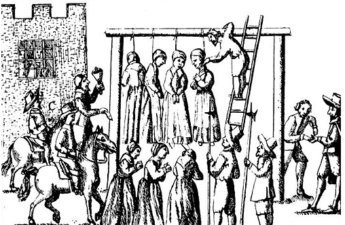
In browsing the English State Papers in the National Archives at Kew or the State Papers Online database, one of the most common types of documents you will encounter are petitions to the crown. Within this subset of records, there…
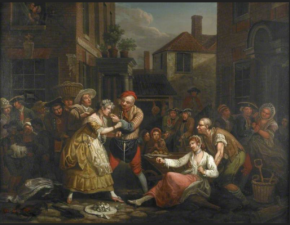
The bizarre 1858 ‘Princes Park Crinoline Case’: 13-year-old girl is key witness in Liverpool’s highest-attendance trial by Tony Whittaker
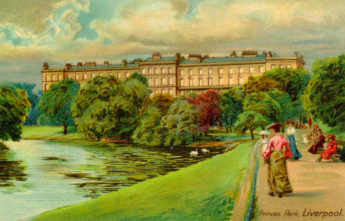
Pleasant autumn weather on Monday 1 November 1858 prompted governess Jane Marsh (20) to give her two charges, Mary Hayes (13½) and sister Alice (12), a break from studies. After an early lunch, they bid farewell to two younger sisters…
The Decriminalisation of Abortion in The Maritime Provinces of Canada and Scotland by Amy Joyce
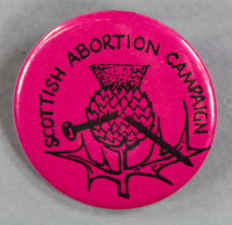
The Maritime Provinces of Canada and Scotland have strong historical ties that link the areas closely. In both places, the decriminalisation of abortion in the late 1960s was a milestone in women’s history but sparked fierce pro-choice and pro-life debates…
The Vixen and the Lioness: Caterina Sforza and Machiavelli by Megan Chance
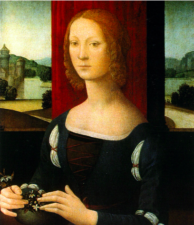
Machiavellian theory is often assumed to purport a rigid distinction between masculinity and femininity resulting from the theoretical understanding of ‘machismo’ and ‘effeminato’. Hannah Pitkin and Jean Bethke Elshtain have assumed that women are therefore excluded from Machiavellian politics.[1] However,…
The Folk-devilling of Feminism by Professor Carol Dyhouse
Feminists have long borne the brunt of satire in the media. In the early years of the last century, women who fought for the right to vote were depicted as bad-humoured harridans with sour faces and stringy hair. ‘Women’s Libbers’…