Early Life
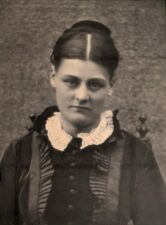
Mary Anne Theresa Whitby was born in 1783. She was the daughter of a naval officer named Thomas Symonds and had seven siblings.
Marriage and Meeting Admiral Cornwallis
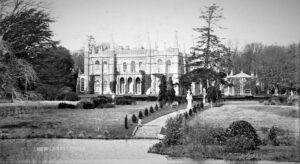
In 1802, Mary married a naval officer named John Whitby who was sent by the admiralty to break the news of Vice Admiral Horatio Nelson’s death to his mistress, Emma Hamilton. During the Battle of Trafalgar in 1805, Nelson was mortally wounded after being shot by a sniper from a French ship. After Mary and John’s wedding, they stayed with his friend and colleague, Admiral Cornwallis, on his estate Newlands Manor in Milford on Sea, Hampshire.[1] Mary became close to Cornwallis and continued to live with him after John returned to sea. Cornwallis later gave Mary his power of attorney and she ran Newlands for him, increasing its size and value.[2]
In 1806, John died and Mary, along with her daughter Theresa and Mary’s sister Juliana, moved to live with Cornwallis, where she continued to look after his affairs and care for him until his death in 1819.[3] After John’s death, Mary’s father-in-law Thomas tried to stop her becoming the administrator of John’s will. This was probably because he loaned money to his family, which they did not want to repay.[4] Cornwallis wrote to Thomas and through a letter was able stop his attempts. [5]
Inheriting Newlands
In his will, Cornwallis left Mary and Theresa large amounts of money and Mary inherited Newlands.[6] Mary initially only had access to the interest on her annuity but later inherited the entire amount after Cornwallis’s nephew died.[7] She continued to acquire more land for Newlands, and by the 1840s she had increased the estate from 62 to 1,900 acres.
Silk Production
Mary decided to produce silk on Newlands Estate. She wanted to help Britain become less dependent on raw silk from abroad, as most of it was imported from other countries.[8] After observing silk worms in Italy she arranged for 100 standard mulberry trees to be imported as well as 1,000 smaller plants from Turin.[9] Silk worm eggs were also imported from Italy to Newlands.[10] Mulberry Trees are important because white mulberry leaves are the preferred diet of silk worms. Mary had a silk expert from France come to Newlands to train her staff in winding silk as they had no prior knowledge of it.[11] These staff included local women who looked after the silk worms in Newland’s loft and wound silk.[12] In 1846 some of Newlands’ silk was sent to Manchester and made into a red gold brocade damask, which was presented to Queen Victoria.[13] It is interesting that Mary and her staff were able to produce raw silk in England. Mulberry Bushes can survive England’s climate but silk worms generally cannot. This is because it is too cold for them so this was why most raw silk was imported. Nonetheless other people besides Whitby and her staff were able to produce raw silk in or around their houses in Britain. This makes you wonder what enabled this production.
Silkworm Expertise and Connection with Charles Darwin
In 1848, Mary wrote A Manual for Rearing Silkworms in England, which focussed on raising silk worms, growing mulberry trees and silk production on Newlands Estate. A few years before, Mary read a paper on silkworm cultivation at a meeting of the British Association for the Advancement of Science in Southampton. Mary met Charles Darwin at this meeting. After this, she and Darwin and corresponded and he asked her about the differences in flight capacity between male and female silkworm moths.[14] Mary sent him examples of both and wrote to him about the differences in wings between male and female silkworm moths.[15] Around this time Darwin was testing his theory of natural selection and had been examining evidence for and against it.[16] Part of this involved examining variations in domestic plants and animals and how these were selected to form new species.[17] To gather information, Darwin wrote to gardeners and people who worked with animals. Mary fit into the second group because of her work on silkworms and Darwin referenced her work, in the Variation of Animals and Plants Under Domestication.[18]
Death
At the time of her death in 1850, Mary owned thirty percent of the land in Milford and on her death, Newlands passed to her daughter, Theresa. Mary was important because her work and knowledge of silkworms contributed to Darwin’s theory of natural selection as well as understanding of silk worms and silk production. She and her staff were also an example of British Raw Silk Production in an era where most raw silk was imported to Britain.
Elizabeth Strange is an art history graduate from the University of Sussex with a particular interest in women’s history. She has expertise on silk and silk ribbons which she gained through volunteering at Whitchurch Silk Mill in Hampshire. Elizabeth is very interested in the role women have played in the silk industry and previously wrote a post about the 18th century British silk designer Anna Maria Garthwaite for the Women’s History Network.
Top image credit: Newlands Manor, Milford on Sea, Circa 1900, Wikimedia Commons.
Reference List
Colp, Ralph ‘Charles Darwin and Mrs Whitby.’ Bull NY Acad Med 48, no.6 (1972): 870-876.
Jolly, Barry ‘Cornwallis and Hampshire.’ Hampshire Studies 74, (2019): 137-152.
St Barbe Museum and Art Gallery. ‘Mary Anne Theresa Whitby.’ Accessed Aug 4,2026. Mary Anne Theresa Whitby – St Barbe Museum & Art Gallery.
Trehearne, Mary. The Making of Mrs Whitby. Milford on Sea Historical Record Society,2021.
Endnotes
[1] ‘Mary Anne Theresa Whitby,’ St Barbe Museum and Art Gallery, Mary Anne Theresa Whitby – St Barbe Museum & Art Gallery.
[2] Mary Trehearne, The Making of Mrs Whitby, (Milford on Sea Historical Record Society, 2021),17.
[3] Trehearne, The Making of Mrs Whitby, 17.
[4] Barry Jolly, ‘Cornwallis and Hampshire,’ Hampshire Studies 74, (2019) :147.
[5] Jolly, ‘Cornwallis and Hampshire,’147.
[6] Trehearne, The Making of Mrs Whitby, 15.
[7] Trehearne, The Making of Mrs Whitby, 15.
[8] St Barbe Museum and Art Gallery’, ‘Mary Anne Theresa Whitby.’
[9] Trehearne, The Making of Mrs Whitby, 17.
[10] Ralph Colp jr ‘Charles Darwin and Mrs Whitby,’ Bull NY Acad Med 48, no.6, (1972), 871.
[11] Colp, ‘Charles Darwin and Mrs Whitby,’871.
[12] Trehearne, The Making of Mrs Whitby, 15.
[13] St Barbe Museum and Art Gallery’, ‘Mary Anne Theresa Whitby.’
[14] Colp, ‘Charles Darwin and Mrs Whitby,’872.
[15] Colp, ‘Charles Darwin and Mrs Whitby,’872.
[16] Colp, ‘Charles Darwin and Mrs Whitby,’874.
[17] Colp, ‘Charles Darwin and Mrs Whitby,’874.
[18] Charles Darwin, The Autobiography of Charles Darwin edited by N Barlow (1958), 119, referenced in Colp, ‘Charles Darwin and Mrs Whitby,’874.