The first session of our Summer Seminar Series will take place on Tuesday, 5 May at 4pm GMT.
Our speaker for the session is Dr Sophie Horrocks David, a Leverhulme Early Career Fellow at the University of Leeds. Sophie will be talking to us about her research on the history of female theatrical entrepreneurs in nineteenth-century France.
If you are interested in hearing Sophie speak about her research, please do sign up for the session here. The seminar will run as an online-only Zoom webinar comprising a 40-minute paper and a Q&A session.
About the Paper
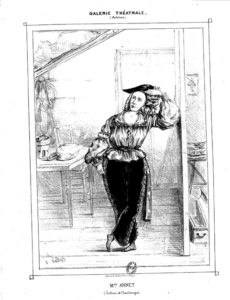
‘Female Theatrical Entrepreneurs: Women Versus the Nineteenth-Century French State’ examines how the theatrical world of nineteenth-century France can shed important light on histories of women’s labour, social place and image, as is well known through research into the work of actresses and celebrity formation. An as-yet uncovered aspect of women’s theatrical power and activity in this era is their roles as female theatrical entrepreneurs. Looking beyond the well-known Sarah Bernhardt, Sophie’s current project rehabilitates the varied and influential pathways utilised by many everyday women working as director-performers in Francophone theatres, revealing their power to shape cultural institutions and advanced artistic practices, including supporting theatre’s political function within state and imperial regimes.
This talk focuses on the relationship between female theatrical entrepreneurs and the French state, the official governor of all theatrical activity and working practices, including the banning of female directrices between 1824-1864. Drawing on case studies of Françoise-Virginie Annet (Théâtre de Troyes) and others, the talk explores how directrices maintained their theatrical activities within the period of repression. While some undertook open negotiation with municipal administrators, others turned to direct or covert collaboration with their male relatives. Many also drew on their local celebrity status or performance skills to leverage cultural capital that served to legitimise their work. The talk suggests that these activities not only reveal women’s strategies for survival in a legally male theatrical sphere, but can also provide a model for scholars to re-conceptualise the essentially collaborative work of theatrical management in this era and beyond.
About the Speaker
Sophie Horrocks David is a Leverhulme Early Career Fellow at the University of Leeds. Sophie’s research centres on French musical culture of the long nineteenth century, with a particular emphasis on the theatrical stage genres, the intersection of music and politics, theatrical touring, and provincial cultural environments.