Join us for the next session of our Summer Seminar Series will take place on Tuesday, 2 June at 4pm GMT.
Our speaker will be Dr Mubarak Tukur, an early-career scholar and Lecturer at the Department of History and Security Studies at Umaru Musa Yar’adua University, Nigeria. Mubarak will be presenting his research on women’s participation in peacebuilding in Northern Nigeria from 1980 to the present day, countering violent extremism through deradicalisation, rehabilitation, and reconciliation amid terrorism and insecurity.
If you are interested in hearing Muburak speak about his research, please sign up for the session here. The seminar will run as an online-only Zoom webinar comprising a 40-minute paper and a Q&A session.
This talk will include topics of terrorism, conflict and violence and might include images audience members could find distressing.
About the Paper
The outbreak of terrorism and insecurity in Northern Nigeria led to rapid growth of studies in this field, more especially with the emergence of the Boko Haram crisis in 2009. Before that, the activities of the radical religious extremist of Maitatsine in Kano in the 1980s have become a precursor to the spread of the subsequent radical extremist ideologies of terrorism in the region. Most crises that have ravaged Northern Nigeria, always portrayed women as victims of conflict in the region. However, in 1980 some women emerged to advocate and participate in an intrareligious peacebuilding during the Maitatsine uprising in Kano in Northern Nigeria. During the conflict, an unsung heroine called Adama participated actively with the security forces in the battlefield in the elimination of Maitatsine fundamentalist. By 1980s to 1990s Shiite religious violence became so evident, and by 2015 it was so disastrous that many of their members were killed as a result of clash with the authority. The post Shiite massacre of 2015 saw some women as peacebuilders, bridging for peace. The Shiite women were so instrumental to the peacebuilding in post Zaria massacre of 2015.
The outbreak of the Boko Haram terrorist activities was another litmus test of women’s participations in peacebuilding in North Eastern Nigeria, as they were actively involved in the deradicalisation and rehabilitation of the vulnerable victims of insurgencies. From 2015-2025, Northern Nigeria was plagued with one of the disastrous terrorist insurgencies of Banditry and kidnapping in which women are the major target of kidnapping, rape, torture and displacement, yet some of them embarked on peacebuilding initiatives.
It is against this background that the paper will examine the gender agency in handling the vulnerabilities of global terror in Northern Nigeria with a purposive sampling technique of women peacebuilders using qualitative research approach and a historical methodology. This study is a product of extensive fieldwork through a historical research method with a qualitative approach. The paper contends that assigning responsibilities to women in peacebuilding is essential for resilience to the crisis of insurgent vulnerability for sustainable peace in Northern Nigeria and beyond. Historically, they facilitated countering violent extremism in the region through ideological deradicalisation and reintegration of the indoctrinated female terrorists, by reinterpretation of the true meaning of the religious script.
About the Speaker
Mubarak Tukur is an early-career scholar, researcher and Lecturer in the Department of History and Security Studies, at Umaru Musa Yar’adua University, Katsina, Nigeria. He is a 2019 Lisa Maskell PhD Fellow of the Gerda-Henkel Stiftung tenable at Makerere University, Kampala, Uganda, where he got his PhD on 2nd February 2024 in the Department of History, Archaeology and Heritage Studies. His PhD Thesis was on ‘Women and Peacebuilding in Northern Nigeria, 1952-2018’. He is part of the chapter contributors for an ongoing ‘Radio and Decolonisation in Africa’ project, organised by the Department of History at the University of the Witwatersrand, in partnership with the Wits History Workshop, Johannesburg, South Africa.
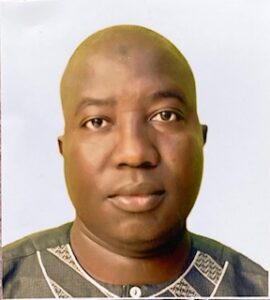 Mubarak recently won a co-authored research grant for an ongoing Book project at University of the Witwatersrand, Johannesburg South Africa. In January, 2026, he also won his institutional Research-Based Grant at Umyu, funded by Tertiary education Trust Fund (Tetfund).
His research interests include Women’s History, Feminism, Gender and Sexuality, Gender and Religious Studies, Environmental History, Gender, Peace and Conflict.