Women are not only amongst the ‘firsts’ in travelling as drivers, designers, and workers. Their membership of organisations associated with travelling and political contribution to improving travel are also recorded in the Paddington Station exhibition dedicated to their cause.…
Category: Blog and News
News items of interest to WHN Members
Well travelled women take over Paddington Station
Part 1 The home of Brunel and Paddington Bear was recently taken over by an exhibition of women’s historical contribution to travelling and designing modes of travel. The colourful posters begin with celebrating Minnie Palmer as the first woman…
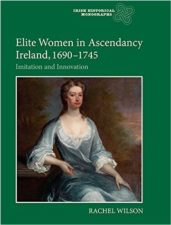
Rachel Wilson, Elite Women in Ascendancy Ireland, 1690-1745: Imitation and Innovation
This book (published 17 Sept. 2015) examines the lives of elite women in Ascendancy Ireland by discussing their marriages, family lives and social, political and philanthropic activities. It is based upon extensive original research into many of the country’s leading…
Serendipity in the Archives – Finding something when least expected!
One of the Manchester signatories was a woman called Marguerite AC Douglas. I had not heard of her before. I couldn’t find any reference to her in the suffrage papers nor in the 1911 census for Lancashire. Was she a suffragist? Or was she involved in the trade union or other campaigns supported by Ashton? Was she evading the 1911 census? There is no mention of her in the wonderful book about some of the women who signed the letter, Doers of the Word by Sybil Oldfield, which is an inspirational and humbling publication … I could find nothing about the elusive Marguerite Douglas and put her to the back of my mind.
But then, just when I was thinking about something else completely …
IFC – Isabella Forsyth Christie – Later Bews
Isabella Forsyth Christie didn’t stay in Rannoch long, just two years, but it was to have a great influence on her life and, after a career that took her back to North Uist and to Argyll, she retired to Kenmore, just over the hill from Rannoch and died there in 1933. By then she was a married woman, having wed John Bews in 1913, when she was forty eight. John Bews was the tailor in Kinloch Rannoch, and she must have met him there seventeen years before. She has no descendants and her life story died with her husband until the quilt reappeared some seventy years later …
DAD’S EULOGY: Adrian Leonard Aldrick – We all knew him as Len or Dad or Dar
All the family helped around the property on Terrigal Road, in the orchard which supplemented the family income and in the vegetable garden or milking cows. Some would often recall having to bring the cows in for milking and in the winter when the frost was crackling under their bare feet, they would stand in the fresh cowpats just to keep their feet warm.
Len worked in the bush with his Father for about three years then got a job at a local orchard. A few months after the war ended, and aged about 19, Len and his mate decided to look for work further afield and ended up at Wee Waa in the North West of the State working on a property during the wheat season. Len also sought work in the Riverina. Our family would return some years later to live at that property outside Wee Waa called “Brushy Park”. By now he had met Neryl and came to live at Carlingford and they were married in 1947. Len worked in a sawmill at Parramatta then at HMV Homebush and EMI, pressing records. The record collection began to grow. Then it was back to Terrigal Road where Len and Neryl built a small house and he began cutting and carting logs for a local sawmill. By then they had two very young daughters, Phyllis and Maureen, and Len would come home from work and they would both get stuck into finishing the house working well into the nights.
Do We Need Feminism? I think I’m going to cry …
Victoria Browne made the case for celebrating even the smallest of victories as a way of not losing heart and staying engaged. Afterwards, Victoria and Fiona were joined by Louise MacKenzie and Judith Hunter from Glasgow City Council Equality Network, Kate Reid, Louise Sheridan and Valerie Wright, for a roundtable which lead to a surprisingly personal discussion about the challenges faced by women today – especially when trying to bring up children, and girls in particular, in a culture of intense sexualisation of women …
Black & Asian women’s history: enslaved women on ships
‘A slave is a human being classed as property and who is forced to work for nothing. An enslaved person is a human being who is made to be a slave. This language is often used instead of the word slave, to refer to the person and their experiences and to avoid the use of dehumanising language’ … But in internet searches using the search term, ‘enslaved women’ not ‘slave’ doesn’t bring anything like as many hits.
Dramatic stories of … enslaved women on ships reveal something about the realities of the long cooped-up and traumatic voyages and gendered relations ….