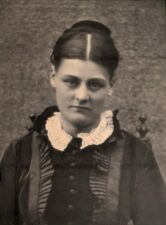
In the late 1970s Jackie Fulton visited social services to ask how she could find childcare for her children so she could go back to work. This was apparently an unusual request. She remembers being met with incredulity and told that she couldn’t consider going back to work if she was still breastfeeding. When she got home, the social worker she’d spoken to had sent a health visitor round to her house to check up on her. At the time in the London Borough of Waltham Forest, where Jackie lived, there were just 20 local authority nursery places for every 1000 children in the borough, and these places were reserved for children at risk of neglect or abuse. Parents of under-fives, primarily women, who wanted to work or study, had few childcare options.
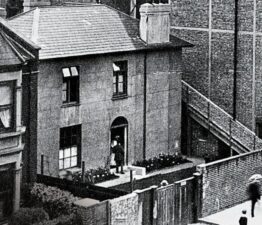
Finding themselves in this situation, a group of parents in Walthamstow came together and started a playgroup. Over the next few years they developed the idea of starting a parent-led nursery co-operative. In 1986 the First Neighbourhood Co-operative Nursery opened. It was run by parents and paid staff, who worked together to provide high quality childcare and education for their children.
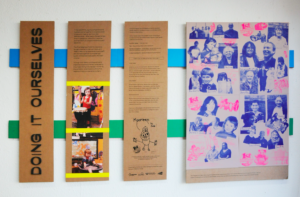
In 2019 our volunteer-led oral history project, Doing it Ourselves, shared the story of the co-operative nursery through an exhibition, series of events and a podcast. The younger people involved in the project were shocked by the lack of childcare available at the time and inspired by the group of women who had worked together to create and run the nursery.
Over the summer of 2019 we held an exhibition at The Mill, a vibrant community centre in Walthamstow, that has a drop-in playroom, well used by local families. To engage parents and young children we held all-ages art activities alongside intergenerational discussions – snatching what moments we could to learn from each other and share our experiences.
Parents of young children, myself included, were especially interested in the story of the nursery, and intrigued by the idea of co-operative childcare. Many said they would like to be more involved in the childcare settings they used, although the time commitment described by former co-operative members – who had done everything from paying the wages to fixing the roof – was somewhat daunting. Childcare today, of course, remains an urgent issue for parents of young children, if not in exactly the same way as the 1970s. More childcare options are now available, but their high cost is inaccessible for many. Lucie Stephens from the New Economics Foundation visited several of our events to tell us about their work around parent-led childcare, which has led to a new nursery being opened in South London.
We are especially grateful to have been given the WHN’s Community History Prize at this moment in time. The coronavirus pandemic has made the history of the First Neighbourhood Co-operative Nursery seem even more relevant than when we concluded the project in 2019. Many private childcare settings are currently under threat of closure, while women have predictably been more likely than men to lose their jobs or reduce their hours as a result of having no access to childcare during the pandemic. Both of these changes threaten a return to the world faced by women like Jackie in the 1970s. Pauline France, who worked at the nursery, reflects “Local action is essential to protect what has been achieved (especially in terms of gender and equality) and timely to consider new approaches to public services”. Perhaps now more then ever we need a new generation to demand, like the people of the First Neighbourhood Co-operative Nursery, “there needs to be something better”.
Rosa Schling is an oral historian and director of On the Record Community Interest Company. Her work has recently focused on recording the histories of community projects, co-operatives, radical bookshops, parenting and childcare. She wrote The Lime Green Mystery: An oral history of the Centerprise co-operative (2017).