An avid and maniacally fast but safe driver, all her life, she maintained that care should be taken to preserve London’s character and charm. Consistent with this interest, she became a member of the London and Home Counties Traffic Advisory Committee. Charm and character preservation lay behind her contesting: “Piccadilly is a beautiful Mess”, resulting in the Fountain of Eros being maintained and preserved in good condition at its centre for many more years.
Category: Blog and News
News items of interest to WHN Members
Lucy Frances Nettlefold, OBE (1891-1966) – Cross-Fertilisation: from Commerce to Committee – Pt 1
At the age of 12, Nancy decided to read Law at Newnham College, Cambridge. This ambition was realised in 1910, after she received her first LLB from the University of London. This first degree was completed in an acknowledgement of the fact that the University of Cambridge did not, then, award Law degrees (or indeed any degrees) to its female graduates … It is a tribute to her determination that in 1914 Nancy went down from Cambridge with a Double First in The Law Tripos: in Part I she was second between the male and female Lists, and fourth in Part II. The year 1948, when the University of Cambridge began awarding degrees to women graduates, finally saw Cambridge award her an MA (Cantab).
First Ever LGBT History Festival – Women & the United Kingdom: Part 2
Sonja Tiernan outlined the very cross-class and life-changing relationship of the daughter of big Anglo-Irish landlord and the working-class Esther Roper from 1897. Eva ‘rejected her aristocratic lifestyle, moving from an opulent mansion in the beautiful countryside of Sligo to a mid-terrace property in the smog-bound quarters of industrial Manchester’. They were together for 30 years. ‘Once labelled as a pair of oddities, it is now clear that the women were open about their relationship, mixing with an eclectic group of radical gay and lesbian activists. The couple became formidable political advocates in England often organising successful and radical campaigns for social justice …
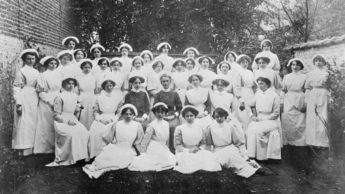
The First World War: Nursing: Call for Papers
A Conference organised by the Women’s History Network, Midlands region. Saturday 21 November: University of Worcester, City Campus, Castle Street, Worcester, WR1 3AS Edith Cavell was executed by a firing squad in Brussels on 12 October 1915 and as part of…
First Ever LGBT History Festival – Women & the United Kingdom: Part 1
In 1979 when the radio announced the First Strike, American Cruise Nuclear missiles were to be based at Greenham Common USAF Airbase, Sheila Standard ‘was gripped with fear and a sense of inevitable disaster, and felt powerless to do anything. The worst bit was her mum lived near Greenham, and would “get it first!” However … [quickly], all over the country, people started to organise into anti-missile groups, and she joined Withington Against the Missiles, a local group in Manchester, and accidentally got involved in an NVDA (Non-Violent Direct Action) protest becoming one of the “Bunker 4”.Then something truly epic happened … Greenham … thousands of women discovering the power of working together, singing, being silly, the wit and repartee, fear and bravery, that goes with bringing fences crashing down, to the mockery of militarism …
Reclaiming Herstory – Affirming & Celebrating Women’s History Sites
2015 is the year to ensure that women’s records are recognised as not only a significant but a central part of US history. The Trust calls for entries, nominations and positive suggestions to recognise women in US history – from all backgrounds, all states and territories, all centuries, all fields of endeavour. The call is on for women to come to the fore, for those who care about US history and herstory, for those who recognise women as equal participants in the building of the country to act! Don’t let another year go by without ensuring the recognition of women through places, spaces, communities, buildings and sites.
Strong Willed & Courageous … Margaret Schencke – A Woman of Fortitude
Margaret Schencke (Gretel in Germany, Margot in Britain) was born in 1888 in Zwickau in Saxony, Germany. She was the only child of her father’s second marriage, but she had several half-brothers and sisters from her father’s previous marriage. Margot…
Young Adult Literature – Censoring Teenage Sexual Autonomy
In the novels by Blume, Klein, et al, ‘two nice kids, in love, have sexual intercourse and no one dies.’ In both Blume’s ‘Forever’ and Klein’s ‘It’s Ok if you Don’t Love Me’, the male love interests are the ones left alone, the girls having moved on and embodied the traditionally ‘masculine’ relationship role. The young women in these books enjoy sex, and their experiences are discussed in detail. Crucially, they enjoy sex as just one component of a rounded lifestyle, as with Blume’s Sybil: ‘Sybil Davison has a genius IQ and has been laid by at least six different guys.’
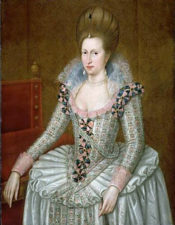
Women’s History Month events from the National Maritime Museum
1. Title: The Queen’s House queens Date: Monday 2nd March Time: 1pm Location: The Queen’s House Price: Free Description: Join our curator, Katy Barrett on a tour of the Queen’s House. Commissioned in 1616 by…