Friday 3 July, 6 – 8pm Royal College of Nursing, London W1 In 1918, volunteer nurse (VAD) Alberta Vickridge entered a poetry competition for men and women on war service. Her poem, ‘Out of the Conflict’ won the competition. The consolation…
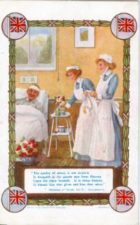
Friday 3 July, 6 – 8pm Royal College of Nursing, London W1 In 1918, volunteer nurse (VAD) Alberta Vickridge entered a poetry competition for men and women on war service. Her poem, ‘Out of the Conflict’ won the competition. The consolation…
Mrs Rebecca Strong, one of Mrs Deeble’s ladies at Netley, wrote: ‘There was normally an orderly attached to each ward, but they were often taken away for relief work such as coal carrying, etc. Each sister had from six to eight of these wards under her charge, and speedily found that the nursing must be done by herself … A special orderly could be had in emergencies, but the nursing was nil.’
… [it] would be wonderful … to have a statue of Eleanor standing proudly in one of the two remaining niches in St George’s Hall, Liverpool. In theory this is perfectly possible, and would be welcome, but in practice it would require around £100,000 to commission and execute. That was the cost of the statue of Kitty Wilkinson, the first Liverpool woman to be so memorialised, in 2012. If there is anyone out there who has ideas of how the money might be raised, or would like to lead a fund raising campaign, we would LOVE to hear from you …
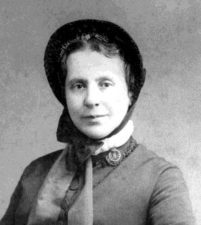
Monday, 29th June 2015 1.00pm – 2.00pm Free – booking required, William Booth Birthplace Museum / Salvation Army Complex, 14 Notintone Place, Sneinton, Nottingham NG2 4QG In observation of the 150th anniversary of the founding of The Salvation Army, this…
There is no indication in the records as to why women left their post except in the rare instances when the word “married” has been noted … Did those women employed for less than a year leave because they were considered unsuitable for the post or did they find the job was not for them ? A newspaper report in 1917 concerning the assault of a former nurse, Mary Elizabeth Parry, stated that after nursing at the Asylum during 1916 she left to become a clerk at the munitions factory outside Chester …
Call for Papers: University of Reading 19-21 April 2016 As part of an international research network funded by an AHRC network grant entitled ‘Mothering Slaves: Comparative Perspectives on Motherhood, Childlessness and the Care of Children in Atlantic Slave Societies’ we…
Women’s Writings of World War I Emma Liggins and Elizabeth Nolan, Manchester Metropolitan University Feminist scholarship has already demonstrated that the experience of the trench soldier should not dominate our understandings of the First World War, recognising that women were…
International Girl Studies Association are seeking submissions for our inaugural conference in 2016. The inaugural conference seeks to bring together researchers and students working on girls and girlhood in any part of the world and in any discipline or interdisciplinary…
A two-day interdisciplinary conference, 29th-30th June 2015, University of Hull Keynote speakers: Anne Laurence (Open University) Women, land and these islands 1550-1750 Amy Erickson (University of Cambridge) Rethinking the significance of inheritance and marriage in landholding Papers from: Sheila Sweetinburgh, Miriam…